
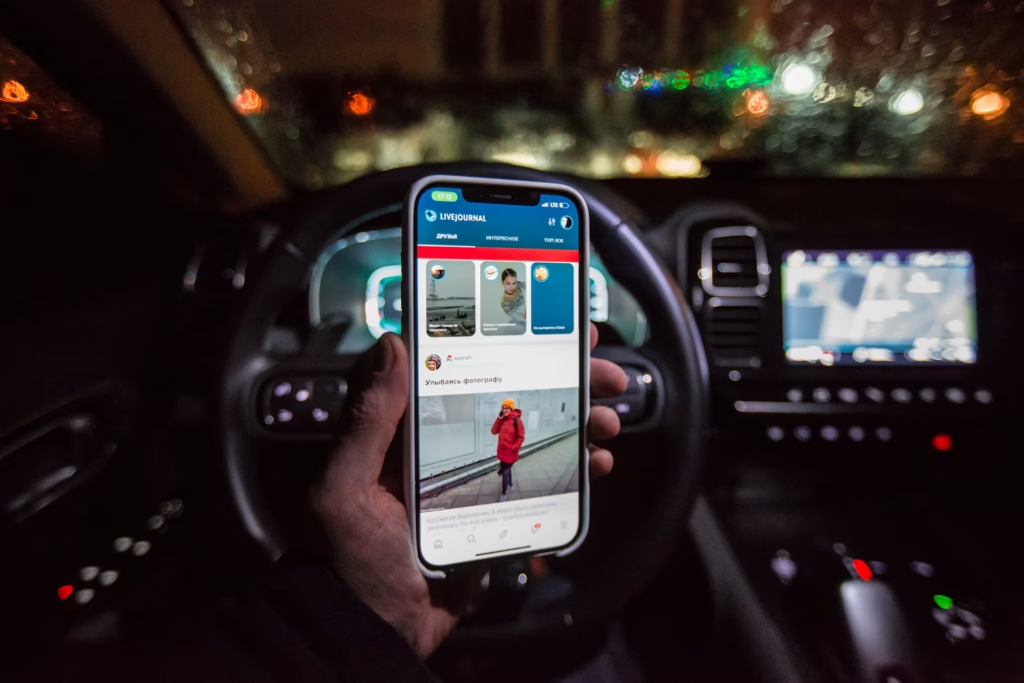
Usage-based car insurance, also called telematics insurance, ties part of your premium to how you drive or how much you drive, rather than to your record and vehicle alone. An app on your phone or a small device plugged into your car measures things like mileage, braking, and speed, and the insurer uses that information to set or adjust your rate. The Insurance Information Institute describes this as a growing part of the auto market.
The appeal is straightforward: drivers who cover few miles or drive steadily may pay less. The trade-off is just as straightforward, because enrolling means sharing driving data with your insurer. This guide explains how these programs work, exactly what they measure, and how to decide whether one is worth it for you. If you want to see where a given insurer writes coverage while you read, the areas GoAuto serves overview is a useful reference.
Key Takeaways
Telematics programs measure real driving through a phone app or a plug-in device.
Pay-how-you-drive prices your behavior; pay-per-mile prices your distance.
Common data points include mileage, hard braking, rapid acceleration, speed, and time of day.
Low-mileage and steady drivers tend to benefit most.
Enrolling means sharing driving data, so weigh the privacy trade-off.
Availability and the effect on your rate vary by state and insurer, and are set out in each program’s disclosures.
What Is Telematics Insurance?
Telematics is the technology that records how a vehicle is driven. Usage-based insurance is the product built on top of that technology, where some or all of your premium reflects the data collected. The two terms are often used interchangeably, but it helps to keep them separate: telematics is the measurement, and usage-based insurance is the pricing that uses it.
Traditional car insurance prices your record, your vehicle, and other rating factors up front, before you drive a mile on the policy. Usage-based insurance adds a layer that reflects your actual driving over a monitoring period, which is why two drivers with similar records can end up with different usage-based results.
How Does Usage-Based Insurance Work?
Most programs follow the same arc. You enroll, either through the insurer’s app or by installing a small device in your car, and you drive normally for a monitoring period. The program records your driving, and at the end of the period your rate reflects what it measured. Some programs offer an initial discount just for signing up, then adjust from there.
There are two broad models. Pay-how-you-drive prices your behavior, rewarding steady driving and reflecting habits like hard braking or late-night trips. Pay-per-mile prices your distance, charging a base rate plus a small amount for each mile, which suits people who drive very little. Some insurers blend the two, using distance and behavior together. Neither model is automatically less expensive, because the outcome depends on your own driving, your mileage, and the specific way the program weighs each factor.
What Data Do These Programs Collect?
The exact data varies by program, but common points include your mileage, hard braking, rapid acceleration, your speed, the time of day you drive, and in some app-based programs whether you handle your phone while driving. Some programs also record location. What a given program collects, how long it keeps the data, and how it affects your rate are described in that program’s disclosures, and the National Association of Insurance Commissioners has published consumer guidance on how these programs use driving data, including a consumer alert on telematics.
Mileage: how far you drive, central to pay-per-mile pricing.
Hard braking and rapid acceleration: markers of aggressive or distracted driving.
Speed: how fast you drive relative to limits, where measured.
Time of day: late night driving carries more risk in most models.
Phone handling: some app based programs flag phone use while driving.
Before enrolling, read the program disclosure so you know what is measured and how it can move your rate. That document, rather than the marketing, is where the real terms live, including any limits on how the data can be shared or used.
It is worth understanding how much control you keep once you enroll. Most programs let you view your own driving data through the app or an online account, so you can see the same trips and scores the insurer uses. If you decide the program is not a good fit, you can usually leave it and return to a traditional rate at renewal, though the exact process and timing are set by the insurer and spelled out in the program terms. Reading how the company stores the data, how long it keeps it, and whether it shares any of it matters as much as reading how the program prices your driving. A well run program states these limits plainly, and the disclosure is where to confirm them. It also helps to think about who else drives the car, since a program tied to your policy will measure every trip, including those taken by a family member or anyone you lend the car to. If several people share the vehicle, their driving becomes part of your score, which is worth factoring in before you enroll. Understanding the controls, the data handling, and who is behind the wheel gives you a full picture of the trade before you commit.
What Are the Pros and Cons?
The main benefit is potential savings for the right driver, along with feedback that can make you a safer one. The main cost is data sharing, and the fact that the same program that can lower a rate can also raise it for some drivers.
Pros: possible savings for low-mileage or steady drivers, useful feedback on your habits, and a rate that reflects how you actually drive rather than a broad category.
Cons: you share driving data with your insurer, some programs can increase a rate for riskier patterns, and you may need to keep an app running or a device installed.
Because the result depends entirely on your driving and the program’s rules, the honest answer to “will it save me money” is that it depends, and the only way to know is to see the terms and a quote.
Is Usage-Based Insurance Worth It, and Who Is It For?
Usage-based insurance tends to fit low-mileage drivers, remote workers, and people who drive steadily and are comfortable sharing data. It is a weaker fit for high-mileage drivers, for people whose schedules push them onto the road late at night, and for anyone who prefers not to be monitored. Availability and the effect on your rate vary by state and by insurer, so the only way to see your own number is to get a quote and read the program disclosure that comes with it.
How to Decide Before You Enroll
A usage-based program is a commitment worth weighing deliberately, since it changes both what you pay and what you share. A short checklist keeps the decision grounded.
Estimate your annual mileage honestly. The fewer miles you drive, the more a pay-per-mile or usage-based program tends to help.
Read the program disclosure and note exactly what is collected and how long it is kept; the Insurance Information Institute covers how these coverages fit a standard auto policy.
Ask how the program can raise a rate as well as lower one, so there are no surprises later.
Compare a usage-based quote against a traditional quote at the same coverage, then choose on the full picture.
If the numbers are close and you value your privacy, a traditional policy may be the more comfortable choice, since it prices your record and vehicle up front without an ongoing record of your daily driving. If you drive little and do not mind the monitoring, a usage-based program can be a genuine saving. Either way, the decision belongs to you once you understand the terms. If you are weighing your options here, contact GoAuto to talk it through.
Frequently Asked Questions
What is the difference between telematics and usage-based insurance?
Telematics is the technology that measures how you drive. Usage-based insurance is the product that prices some or all of your premium from that data. In everyday use the terms overlap, but telematics is the measurement and usage-based insurance is the pricing built on it.
Does telematics insurance track my location?
Some programs record location and some do not. What each program collects, how long it keeps the data, and how it affects your rate are set out in the program’s disclosure. Read that document before enrolling so you know exactly what you are agreeing to.
Can usage-based insurance raise my rate?
For some drivers, yes. Pay-how-you-drive programs reward steady driving and can reflect patterns like hard braking or frequent late night trips. Whether your rate goes down, stays flat, or rises depends on the program’s rules and your own driving.
What is pay-per-mile insurance?
Pay-per-mile is a usage-based model priced mainly on distance. You pay a base rate plus a small charge for each mile you drive. It tends to suit people who drive very little, since the per-mile charge stays low when the odometer does.
Do I need a device or just an app?
It varies by program. Some use a smartphone app, some use a small device that plugs into your car’s diagnostic port, and some use both. The program disclosure explains what is required before you enroll.
Weighing It Up
Usage-based insurance is worth considering if you drive few miles or drive steadily and you are comfortable sharing driving data. Start by reading the program disclosure so you understand what is measured and how it can change your rate, then compare a usage-based quote against a traditional one at the same coverage. If you are shopping in a state where an insurer operates, you can review its common questions before you request a quote. The right choice is the one that fits how you actually drive and how you feel about being measured.
About GoAuto
GoAuto Insurance writes auto coverage in Texas, Louisiana, Georgia, Florida, Nevada, Ohio, Alabama, and Tennessee, and focuses on state-minimum liability coverage, the lowest coverage level the law allows. Program availability, coverage, and pricing depend on your state and your individual circumstances, so to see what applies to you, get a quote.
This article is for general informational purposes only and is not legal, financial, or insurance advice. Program availability, coverage, pricing, and requirements vary by state and by driver. GoAuto Insurance is available in TX, LA, GA, FL, NV, OH, AL, and TN. Confirm requirements with your state Department of Insurance and get a quote for terms specific to you.
Sources
- National Association of Insurance Commissioners, Usage-Based Insurance and Telematics:
https://content.naic.org/insurance-topics/telematics - Insurance Information Institute, What Determines the Price of My Auto Insurance Policy:
https://www.iii.org/article/what-determines-the-price-of-an-auto-insurance-policy - National Association of Insurance Commissioners, Want Your Auto Insurer to Track Your Driving? Understanding Usage-Based Insurance:
https://content.naic.org/article/consumer-insight-want-your-auto-insurer-track-your-driving-understanding-usage-based-insurance - Insurance Information Institute, Auto Insurance Basics:
https://www.iii.org/article/auto-insurance-basics