
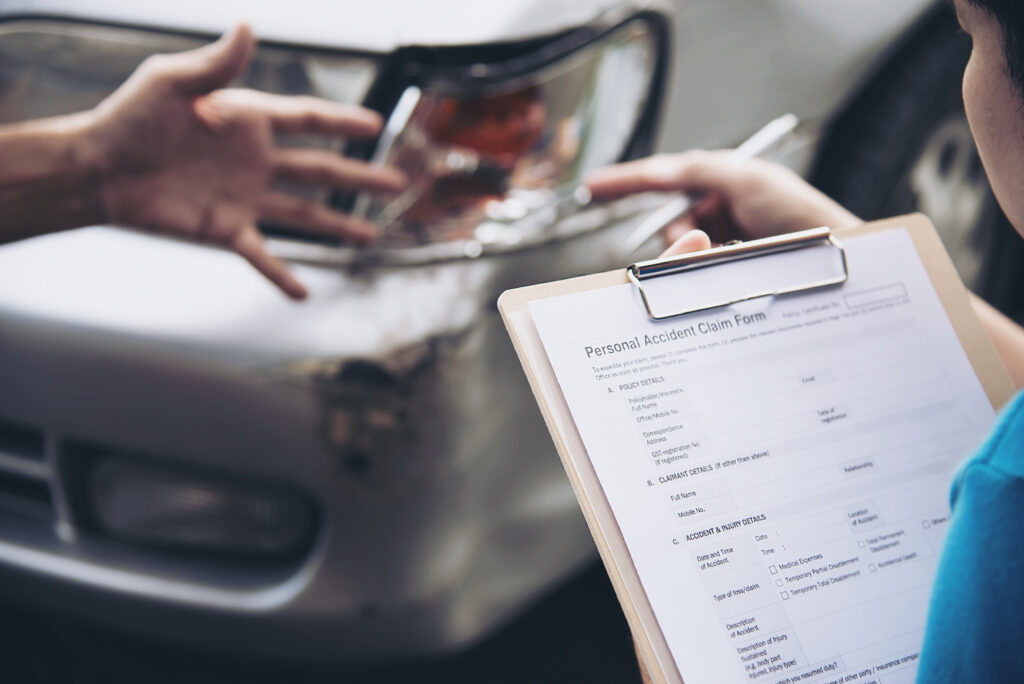
A ticket or an at-fault accident raises your car insurance because it changes how risky you look to an insurer, and the increase is usually larger than drivers expect. In published 2026 data, one at-fault accident raises a full coverage premium by roughly 50 percent on average, while a single speeding ticket adds around 29 percent on average. The exact dollar figure depends heavily on where you live, because the same percentage lands on a very different starting price in each state. Because the base cost is what a violation gets multiplied against, where you live changes the dollar impact.
This guide breaks down what the published increases actually are for accidents and tickets, why the cost of the same violation varies so much from state to state, how long the increase sticks around, and what lowers your bill afterward. Every figure is a market average from a named source rather than a quote for your situation.
Key Takeaways
An at-fault accident raises full coverage rates about 50 percent on average in 2026, per published analysis.
A speeding ticket typically adds around 29 percent on average, often a few hundred dollars in the first year.
The dollar impact is bigger in high-cost states because the increase is a percentage of a higher base rate.
Tickets and accidents usually affect your premium for three to five years.
The size of the increase varies widely by insurer, so comparing quotes after a violation matters more than usual.
No published average is your actual number. Only a quote reflects your record and ZIP code.
How Much Does an At-Fault Accident Raise Your Rate?
An at-fault accident is one of the largest single increases in auto insurance. According to NerdWallet’s 2026 analysis, full coverage rates rise about 50 percent on average after one at-fault accident, which works out to roughly $98 more per month, or around $1,173 more per year for a typical driver. The increase reflects that a driver who has caused one crash is statistically more likely to cause another.
How much your own rate moves depends a great deal on the insurer. Across major companies, the increase for the same at-fault accident ranges from around 29 percent at the low end to about 60 percent at the high end. That spread is exactly why shopping matters after an accident: two insurers can price the same event very differently, and the one that was lowest-priced before the accident is not always the lowest-priced after it.
How Much Does a Speeding Ticket Raise Your Rate?
A speeding ticket costs less than an at-fault accident but still lands a meaningful increase. Published 2026 figures put the typical rise around 29 percent on average, commonly a few hundred dollars in the first year, around $677 on our calculation from the published clean-record and speeding-ticket averages, depending on the violation and the insurer. Faster speeds, school-zone violations, and reckless-driving charges sit at the higher end, while a first minor ticket sits at the lower end. GoAuto’s own overview of how speeding tickets affect your rate walks through the same pattern.
As with accidents, the increase varies widely by company, so a ticket that barely moves the price at one insurer can add a lot at another. A single minor ticket also tends to fade faster than an accident, which is worth keeping in mind before you decide whether to fight it or accept it.
Why the Same Increase Costs More in Some States Than Others
A percentage increase sounds uniform, but it is applied to your state’s base rate, and those base rates differ sharply. The same 50 percent accident increase adds far more in a high-cost state like Louisiana or Florida than in a lower-cost state like Ohio or Alabama, simply because it is a percentage of a larger number. The Insurance Information Institute lists location among the core factors that set your premium in the first place.
The table below shows the published 2026 average annual cost of minimum coverage across several states. It is the starting point a violation gets applied against, so a state near the top of this list will see a larger dollar jump from the same ticket or accident.
State |
Published average annual minimum-coverage cost (2026) |
Louisiana |
About $1,250 |
Georgia |
About $1,043 |
Texas |
About $1,078 |
Florida |
About $913 |
Nevada |
About $1,019 |
Ohio |
About $498 |
Alabama |
About $489 |
Figures are published third-party benchmarks as of 2026 and can change over time. Confirm current numbers before relying on them. The point is the pattern: a driver in Louisiana and a driver in Alabama can face the same percentage increase and end up with very different bills.
How Long Does the Increase Last?
Both tickets and at-fault accidents typically affect your premium for three to five years, depending on your state and your insurer. The violation usually weighs most heavily in the first year and eases as it ages, provided you avoid new incidents. Once it falls off your record, its effect on your rate ends. That timeline is why staying claim-free and ticket-free after an incident is a reliable way to bring your rate back down.
What Affects How Much Your Rate Goes Up
The published averages describe a typical driver, but your own increase depends on several things working together:
Fault: an at-fault accident raises rates far more than a not-at-fault one, which often has little or no effect.
Severity and type: a serious injury claim or a reckless-driving charge weighs more than a minor fender bender or a first speeding ticket.
Your prior record: a first incident on an otherwise clean record is treated more gently than one added to a history of violations.
Your state: state rules and base rates change both the percentage and the dollar impact.
Your insurer: each company files its own rating plan, so the same event is priced differently from one carrier to the next.
Because these factors combine, the only way to know your real number is to compare quotes at identical coverage after the incident, rather than assuming the average applies to you.
How to Lower Your Rate After a Ticket or Accident
An increase is not permanent, and a few steps help, several of them in the Insurance Information Institute’s nine ways to lower your auto insurance costs. The most effective is to compare quotes across several insurers, since the company that priced your record best before the incident may not be the one that prices it best afterward. GoAuto’s guide to keeping coverage costs down covers the main levers.
Compare at least three quotes for the same coverage, because insurers weigh violations very differently.
Ask about a defensive-driving or traffic-school course, which some states and insurers allow to offset a ticket.
Reconsider your coverage level and deductible, since adjusting them changes the premium the increase is applied to.
Keep the record clean going forward, since time is what removes the surcharge. If you are weighing your options here, contact GoAuto to talk it through.
Frequently Asked Questions
How much does one at-fault accident raise insurance?
In published 2026 data, one at-fault accident raises full coverage rates about 50 percent on average, roughly $98 per month or around $1,173 per year for a typical driver. Your own increase depends on your insurer, your state, and your prior record, so it can be higher or lower.
How much does a speeding ticket raise insurance?
A speeding ticket typically raises rates around 29 percent on average, often a few hundred dollars in the first year. A first minor ticket sits at the lower end, while high-speed or reckless-driving charges sit at the higher end. The increase varies widely by insurer.
Does the increase cost more in some states?
Yes. The percentage increase is applied to your state’s base rate, so the same violation adds more in a high-cost state than in a low-cost one. A driver in Louisiana and a driver in Alabama can face the same percentage and end up with very different bills.
How long does a ticket or accident affect my rate?
Usually three to five years, depending on your state and insurer. The effect is largest in the first year and fades as the incident ages, as long as you avoid new violations or claims.
Will shopping around actually lower my rate after an accident?
Often, yes. Insurers price the same accident very differently, from roughly a quarter more to close to sixty percent more. Comparing quotes at identical coverage is a reliable way to find the company that treats your record most favorably.
What This Means for You
A ticket or an at-fault accident raises your rate, but by how much comes down to your state’s base cost, your insurer’s rating rules, and your record. Use the published averages to set expectations rather than to predict your bill. The practical move after any incident is to shop several insurers at the same coverage and let your real quotes decide, because the spread between carriers is widest exactly when your record has a mark on it. Whatever you do, avoid a coverage lapse while you shop, since a gap adds its own increase on top of the one you already have.
About GoAuto
GoAuto Insurance writes auto coverage across its licensed states and considers drivers with a range of records, including tickets and accidents. GoAuto focuses on state-minimum liability coverage, the lowest coverage level the law allows. Eligibility, coverage, and pricing depend on your state and your individual circumstances, so to see what applies to you, get a quote.
This article is for general informational purposes only and is not legal, financial, or insurance advice. Coverage, pricing, eligibility, and requirements vary by state and by driver. GoAuto Insurance is available in TX, LA, GA, FL, NV, OH, AL, and TN. Confirm requirements with your state Department of Insurance and get a quote for terms specific to you.
Sources
- NerdWallet, How Much Does Insurance Increase After an Accident (2026 analysis)
- NerdWallet, How Much a Speeding Ticket Raises Your Insurance
- Insurance Information Institute, What Determines the Price of My Auto Insurance Policy
- NerdWallet, Average Car Insurance Cost (2026 rate analysis, state averages)
- Insurance Information Institute, Nine Ways to Lower Your Auto Insurance Costs