
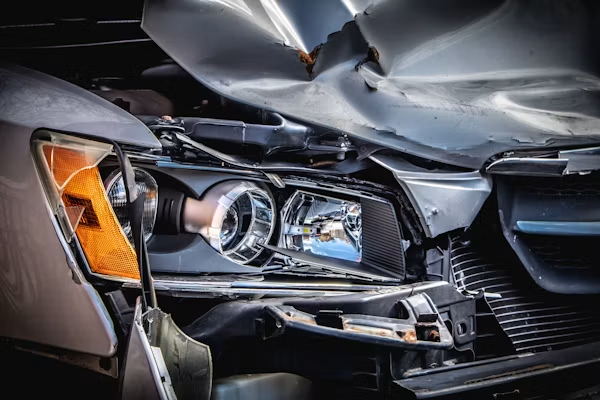
You can usually buy car insurance for a salvage or rebuilt-title vehicle, though your choices are narrower than they are for a clean-title car. Liability coverage is commonly available. Comprehensive and collision are harder to add, and when they are offered, the payout reflects the car’s reduced value. Insurers also want proof the vehicle was repaired and re-inspected before they write a policy on it.
This guide explains the difference between a salvage title and a rebuilt title, what coverage you can and cannot get, what documentation insurers ask for first, and how claims and value work once the car is back on the road. A salvage brand starts with a total loss, so it helps to understand when a car is considered totaled before you shop for coverage on one.
Key Takeaways
- You can usually buy liability coverage for a rebuilt-title vehicle, since the risk to others does not change with the car’s history.
- Comprehensive and collision are harder to add on a rebuilt title, and when they are offered the payout reflects the car’s reduced value.
- A salvage title marks a vehicle declared a total loss, and it generally cannot be driven until it is repaired, re-inspected, and re-branded as rebuilt.
- Insurers typically require the rebuilt title, photos of the repaired car, repair records, and sometimes an independent appraisal before writing physical damage coverage.
- A physical damage claim pays the car’s actual cash value at the time of the loss, which is generally lower for a rebuilt title than for a clean-title version.
- Because company rules vary widely, comparing more than one quote matters more on a rebuilt title than on a clean-title car.
Can You Insure a Salvage or Rebuilt-Title Car?
The short answer is yes, with limits. Most insurers will write liability coverage on a rebuilt-title vehicle, because liability pays for injuries and property damage you cause to other people, and that risk does not change based on your car’s history. Many states require you to carry at least minimum liability to register and drive any vehicle, salvage history or not, so a rebuilt car still needs that baseline protection.
Physical damage coverage is where availability narrows. Comprehensive and collision pay to repair or replace your own car, and a rebuilt vehicle is harder to value and repair, so many insurers restrict or decline it. Company rules vary widely, which is why comparing options matters more here than with an ordinary car.
Availability also depends on where you live and register the vehicle. GoAuto writes coverage across the states where it is licensed, and you can see the current list on the areas GoAuto serves page. Each state sets its own titling and inspection rules, and those rules shape what an insurer will offer on a car that once carried a salvage brand. The practical takeaway is that liability is the consistent part of the equation, and full coverage is the part you have to shop for.
Salvage Title vs Rebuilt Title
These two terms are related but not the same, and the difference drives everything else. A salvage title is issued when an insurer or the state declares a vehicle a total loss, usually because the cost to repair it after a crash, flood, fire, or theft recovery is close to or above its market value. A car with an active salvage title is generally not legal to drive on public roads. The brand marks the vehicle as damaged beyond an ordinary repair threshold.
A rebuilt title comes later. Once someone repairs a salvage vehicle and it passes a state inspection confirming it is roadworthy, the title is re-branded from salvage to rebuilt. A rebuilt-title car can be registered and driven, but the brand stays on the title permanently and follows the vehicle when it is sold.
For insurance, the distinction is straightforward. You generally cannot insure or drive a car while it still holds a salvage title, because it has not yet been cleared for the road. Once it becomes a rebuilt title, coverage becomes possible, though the brand signals prior major damage that insurers weigh when they decide what to offer. Knowing which brand your title carries tells you where you stand before you request a quote.
What Coverage You Can and Cannot Get
It helps to separate coverage into two buckets. The first is liability, which most insurers will write on a rebuilt-title vehicle. Liability covers the other party when you are at fault, and it is the coverage states require you to carry. If you want to understand how this differs from coverage for your own car, the GoAuto guide on liability versus collision coverage breaks down the split.
The second bucket is physical damage, meaning comprehensive and collision. Comprehensive handles causes like theft, fire, hail, and flooding, while collision handles crash damage to your own car. On a rebuilt title, these are the coverages insurers restrict, add conditions to, or decline. When physical damage is available, the insurer often values the car below a comparable clean-title model, because the market treats a rebuilt vehicle as worth less. The Insurance Information Institute notes that the cost of your car is a major factor in what you pay to insure it, so a lower value can affect both what is offered and how it is priced.
Add-ons that depend on a settled vehicle value, such as new-car replacement, generally are not offered on rebuilt titles, and products like gap coverage may also be limited. The pattern is consistent: coverage tied to your car’s value is where a salvage history matters most, and coverage tied to your responsibility toward others is where it matters least. Understanding that division helps you set expectations before you ask what a specific insurer will write.
What Insurers Require First
Before an insurer will write physical damage coverage on a rebuilt vehicle, it usually asks you to document the car’s condition. Requirements differ by company and state, but the common requests include:
- a copy of the rebuilt title showing the car passed a state inspection,
- photos of the repaired vehicle, inside and out,
- records of the repairs, including parts and receipts,
- and, in some cases, an independent appraisal of the current value.
The state inspection is the gateway step. A salvage vehicle has to pass a state examination confirming it is roadworthy before the title can be re-branded as rebuilt, and states set their own procedures for that check. Because those rules change, it is worth reading them on the official source for your state, such as your state motor vehicle agency. GoAuto operates in several states, so confirm the local titling and inspection rules for where you register, and you can check what applies to your situation with GoAuto through the contact page before you request a quote.
The appraisal, when required, protects both sides. It documents what the car is worth in its rebuilt condition, which sets the value the insurer would use at claim time. Gathering these items before you request a quote tends to make the conversation smoother, because the insurer can evaluate the actual vehicle rather than an unknown one.
How Claims and Value Work on a Rebuilt Title
If you carry physical damage coverage on a rebuilt vehicle and later file a claim, the payout is based on the car’s actual cash value at the time of the loss. According to the National Association of Insurance Commissioners, an insurer pays what your vehicle was worth as a used car the moment before the crash, using resources like used-car value guides as a reference rather than a fixed figure. For a rebuilt title, that value is generally lower than a clean-title version of the same car, because the salvage brand reduces market value.
That matters in two situations. If the car is damaged again and repaired, the settlement reflects the reduced value. If it is totaled a second time, the payout is based on the rebuilt vehicle’s worth, which can sit well below what a comparable clean-title car would bring. Knowing this ahead of time helps you decide whether paying for physical damage coverage makes sense for your situation, or whether liability alone fits the car’s value better.
Financing adds another layer. Lenders that hold a loan on a car often require full coverage, and some are cautious about rebuilt titles, so it is worth confirming both the lender’s and the insurer’s rules early. The GoAuto guide on whether you need full coverage to finance a car explains how that requirement usually works.
Because rules and appetite for rebuilt titles vary so much between companies, shopping carefully matters more here than with a clean-title car. Some insurers write full coverage on a rebuilt vehicle with only a few conditions, others limit it to liability, and a few decline the vehicle altogether, so gathering more than one quote gives you a realistic picture of what is actually available for your car. When you compare, ask each company the same questions: whether it will write comprehensive and collision, what documentation it needs, how it will value the vehicle at claim time, and whether any add-ons are off the table. It also helps to keep your repair records and inspection paperwork organized from the start, since a company that can see exactly how the car was rebuilt is in a better position to offer coverage than one working from an unknown history. If a company does decline physical damage coverage, you still have options, since another insurer may weigh the same rebuilt title differently, and liability coverage remains available to keep you legal while you continue to compare. Setting expectations this way before you buy makes it easier to judge whether a given policy fits the car and the way you plan to use it. If you are not sure what coverage is available for your rebuilt-title car, contact GoAuto to check your options.
Frequently Asked Questions
Can you insure a salvage-title car?
Generally not while it still carries a salvage title, because the car has not passed the inspection that clears it for the road. Once it is repaired and re-inspected, the title becomes rebuilt and coverage becomes possible, most often liability first.
Is it harder to get full coverage on a rebuilt title?
Often, yes. Liability is commonly available, but comprehensive and collision are the coverages insurers restrict or decline, and when they are offered the car is usually valued lower. Availability and requirements vary by company and by state.
What documents do insurers ask for?
Commonly the rebuilt title, photos of the repaired car, repair records, and sometimes an independent appraisal. The state inspection that re-brands the title from salvage to rebuilt is the key step, and the exact rules vary by state.
How much will a claim pay on a rebuilt title?
Physical damage claims pay the car’s actual cash value at the time of the loss, which is generally lower for a rebuilt title than for a clean-title version of the same vehicle. The insurer uses used-car value guides as a reference.
About GoAuto
GoAuto Insurance writes auto coverage across its licensed states, with a focus on the state-minimum liability coverage that drivers are required to carry. Because what applies to you depends on your state, your record, and your individual situation, the reliable way to see your options and what they cost is to get a quote. You can start a policy or ask questions about your coverage directly with GoAuto.
Sources
- Insurance Information Institute, What Determines the Price of My Auto Insurance Policy?
- National Association of Insurance Commissioners, Auto Insurance