
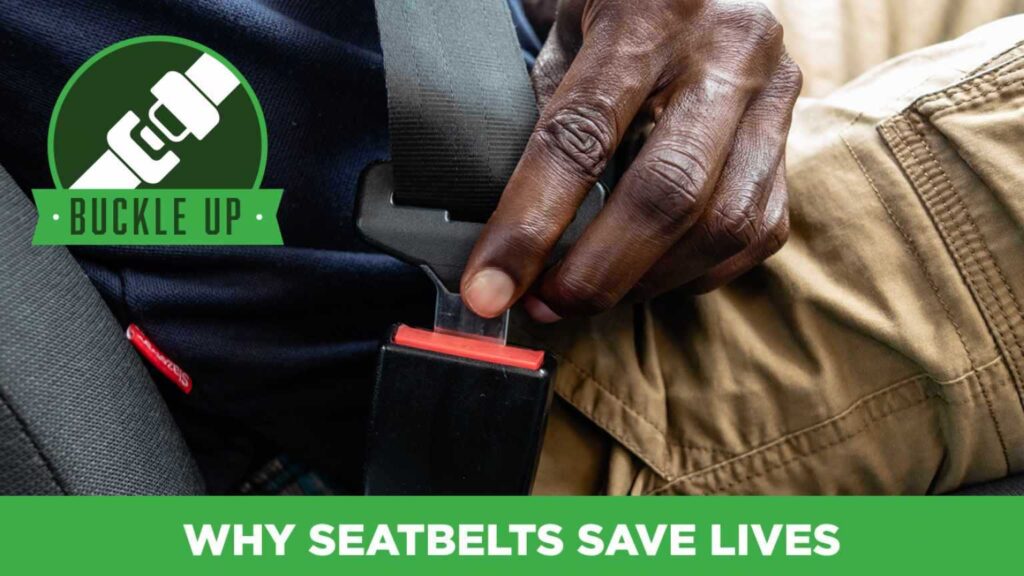
A seat belt ticket may seem minor compared to a speeding ticket or reckless driving. Yet thousands of drivers every month get seat belt violations that may affect insurance rates, safe-driver discounts, or accident claims.
The answer depends on state laws, insurance company guidelines, and your driving history. In many cases, a seat belt citation has a smaller impact than major moving violations. However, it can still affect underwriting decisions, discount eligibility, and even the outcome of certain injury claims after a crash.
What is not up for debate is the value of wearing a seat belt.
According to research cited by the National Highway Traffic Safety Administration (NHTSA), properly wearing a lap and shoulder belt reduces the risk of fatal injury for front-seat passenger vehicle occupants by 45%.
For drivers and passengers in SUVs, pickup trucks, and vans, the benefits are even greater: seat belt use reduces the risk of fatal injury by 60%.
Despite decades of public safety campaigns and seat belt laws in nearly every state, millions of Americans still travel unrestrained. Understanding both the safety and insurance consequences of that decision can help drivers make better choices behind the wheel.
These numbers help explain why law enforcement agencies, insurance companies, vehicle manufacturers, and safety organizations continue to encourage seat belt use. Few safety features provide such a large reduction in injury risk with such a simple action.
Why Seat Belts Save Lives
Understanding Crash Physics
When a vehicle is moving, everyone inside is traveling at the same speed as the vehicle. During a collision, the vehicle may stop within a fraction of a second, but the occupants continue moving forward due to momentum.
Without a seat belt, occupants may:
- Strike the steering wheel
- Hit the dashboard
- Impact side structures
- Collide with other passengers
- Be ejected from the vehicle
Seat belts help distribute crash forces across stronger areas of the body, including the chest, shoulders, and pelvis, reducing the likelihood of severe injuries.
Seat Belts and Airbags Work Together
Many drivers mistakenly believe airbags provide enough protection on their own.
In reality, airbags are designed to supplement seat belts, not replace them.
seat belts position occupants properly so airbags can work as intended. Without a seat belt, a deploying airbag may not provide adequate protection and can sometimes contribute to serious injuries due to improper occupant positioning.
Wearing a seat belt Correctly
For maximum protection:
- Place the lap belt across your hips, not your stomach.
- Position the shoulder belt across the center of your chest.
- Never place the shoulder belt behind your back.
- Never wear the shoulder belt under your arm.
- Ensure the belt fits snugly.
Even short trips close to home carry crash risks. Most drivers do not know when or where another motorist will make a mistake.
Child Safety Matters
Children require additional protection because adult seat belts are designed for adult bodies.
Depending on age, height, and weight, children may need:
- Rear-facing car seats
- Forward-facing car seats
- Booster seats
Following current child restraint recommendations significantly improves protection during a crash.
Does a seat belt Ticket Affect Insurance?
The short answer is: sometimes.
A seat belt ticket can affect insurance, but the impact varies based on:
- State laws
- Insurance company guidelines
- Driving history
- Number of prior violations
- Whether the citation appears on your driving record
For many drivers, a single seat belt citation may not trigger a surcharge. However, repeated violations can contribute to an overall higher-risk profile.
Compared with major violations, seat belt tickets typically carry a smaller insurance impact.
Some insurers do not increase premiums after a first seat belt ticket. Others may review the violation when determining eligibility for preferred pricing or safe-driver programs.
Does a Seat Belt Ticket Go on Your Driving Record?
The answer varies by state.
Some states classify seat belt violations as non-moving offenses. Others may still record the citation in a way that can be reviewed by insurers.
Even when no points are assessed, insurance companies may still have access to violation histories during underwriting reviews.
Can You Lose Safe Driver Discounts?
Many insurers reward drivers who maintain:
- Clean driving records
- No recent citations
- Accident-free histories
A seat belt citation may affect eligibility for certain discounts even if it does not directly trigger a premium increase.
How Long Can This Ticket Affect Insurance?
When considered by insurers, traffic violations often remain relevant for three to five years.
The exact timeframe depends on:
- State regulations
- Company underwriting practices
- Overall driving history
- Additional violations
Maintaining a clean record afterward often helps minimize long-term effects.
Property Damage Claims
seat belt use generally does not affect payment for vehicle damage under a covered claim.
If your policy includes collision coverage, insurers typically evaluate the physical damage to the vehicle rather than whether you were wearing a seat belt.
Injury Claims
Injury claims can be different.
Depending on state law:
- Compensation may be reduced.
- Comparative negligence rules may apply.
- Settlement negotiations may be affected.
- Failure to wear a seat belt may be introduced as evidence.
These rules vary significantly by jurisdiction.
Why Insurers Care
Insurance companies analyze risk and claim severity.
Drivers who wear seat belts are statistically less likely to suffer catastrophic injuries, resulting in lower medical costs and lower claim payouts.
That is one reason insurers continue to encourage seat belt use through education, safe-driver programs, and risk assessment models.
US State Seat Belt Requirements & Usage Rates
| State | Seat Belt Required? | Enforcement Type | Who Must Wear It | Seat Belt Usage Rate (2022) |
| Alabama | Yes | Primary | All ages, all seats | 92.7% |
| Alaska | Yes | Primary | All ages, all seats | 91.5% |
| Arizona | Yes | Secondary | Front seats (all ages); Rear seats (under 16) | 87.0% |
| Arkansas | Yes | Primary | Front seats (all ages); Rear seats (under 16) | 79.1% |
| California | Yes | Primary | All ages, all seats | 95.3% |
| Colorado | Yes | Secondary | Front seats (all ages); Rear seats (under 18) | 87.0% |
| Connecticut | Yes | Primary | All ages, all seats | 92.1% |
| Delaware | Yes | Primary | All ages, all seats | 90.4% |
| District of Columbia | Yes | Primary | All ages, all seats | 95.1% |
| Florida | Yes | Primary | Front seats (all ages); Rear seats (under 18) | 88.3% |
| Georgia | Yes | Primary | Front seats (all ages); Rear seats (under 18) | 89.3% |
| Hawaii | Yes | Primary | All ages, all seats | 95.9% |
| Idaho | Yes | Secondary | All ages, all seats | 87.6% |
| Illinois | Yes | Primary | All ages, all seats | 93.0% |
| Indiana | Yes | Primary | All ages, all seats | 93.0% |
| Iowa | Yes | Primary | Front seats (all ages); Rear seats (under 18) | 95.9% |
| Kansas | Yes | Primary | All ages (14 and older covered by adult law) | 87.2% |
| Kentucky | Yes | Primary | All ages, all seats | 86.7% |
| Louisiana | Yes | Primary | All ages, all seats | 86.1% |
| Maine | Yes | Primary | All ages, all seats | 93.4% |
| Maryland | Yes | Primary | All ages, all seats | 92.7% |
| Massachusetts | Yes | Secondary | All ages (13 and older covered by adult law) | 77.0% |
| Michigan | Yes | Primary | Front seats (all ages); Rear seats (under 16) | 92.9% |
| Minnesota | Yes | Primary | All ages, all seats | 93.3% |
| Mississippi | Yes | Primary | All ages, all seats | 78.9% |
| Missouri | Yes | Secondary | Front seats (16 and older); All seats (ages 8–15) | 88.9% |
| Montana | Yes | Secondary | All ages, all seats | 92.9% |
| Nebraska | Yes | Secondary | Front seats (18 and older) | 76.3% |
| Nevada | Yes | Secondary | All ages, all seats | 93.1% |
| New Hampshire | No (Adults) | None for adults | Minors only (ages 17 and under) | 75.7% |
| New Jersey | Yes | Primary | All ages, all seats | 92.9% |
| New Mexico | Yes | Primary | All ages, all seats | 89.8% |
| New York | Yes | Primary | All ages, all seats | 91.9% |
| North Carolina | Yes | Primary (Front) / Secondary (Rear) | All ages, all seats | 90.9% |
| North Dakota | Yes | Secondary | Front seats (18 and older); All seats (under 18) | 80.6% |
| Ohio | Yes | Secondary | Front seats (15 and older); All seats (ages 8–14) | 80.8% |
| Oklahoma | Yes | Primary | Front seats (13 and older) | 80.0% |
| Oregon | Yes | Primary | All ages, all seats | 96.5% |
| Pennsylvania | Yes | Secondary | Front seats (all ages); Rear seats (under 18) | 89.9% |
| Rhode Island | Yes | Primary | All ages, all seats | 87.1% |
| South Carolina | Yes | Primary | All ages, all seats | 90.6% |
| South Dakota | Yes | Secondary | Front seats (all ages) | 88.1% |
| Tennessee | Yes | Primary | All ages, all seats | 90.5% |
| Texas | Yes | Primary | All ages, all seats | 90.4% |
| Utah | Yes | Primary | All ages, all seats | 91.8% |
| Vermont | Yes | Primary | All ages, all seats | 90.4% |
| Virginia | Yes | Secondary | Front seats (all ages); Rear seats (under 18) | 75.6% |
| Washington | Yes | Primary | All ages, all seats | 93.9% |
| West Virginia | Yes | Primary | All ages, all seats | 92.5% |
| Wisconsin | Yes | Primary | All ages, all seats | 87.5% |
| Wyoming | Yes | Secondary | All ages, all seats | 78.3% |
National observed seat belt use reached 91.6% in 2022.
The Bottom Line
A seat belt ticket usually carries less insurance risk than speeding, reckless driving, or DUI violations. However, it can still affect safe-driver discounts, underwriting decisions, and certain injury claims depending on state laws and insurer policies.
More importantly, seat belts remain one of the simplest and most effective safety tools available to drivers. A few seconds spent buckling up can dramatically reduce the risk of severe injuries, expensive medical bills, and long-term financial consequences after a crash.
At GoAuto Insurance, we encourage every driver to buckle up on every trip, regardless of distance. Preventing injuries is always easier than dealing with the consequences of a serious crash.