
Rain may look less dangerous than snow or ice, but national crash data shows wet roads are one of the biggest weather-related driving risks in the United States. According to the Federal Highway Administration, about 75% of weather-related crashes happen on wet pavement, and 47% happen during rainfall. Rain safety has been part of road design and driver education for decades because wet pavement has always created a predictable crash pattern. As highways became faster and traffic volumes increased in the 20th century, transportation agencies began treating wet-weather crashes as a separate safety problem, not just a normal part of bad weather. Modern wet-weather safety programs now focus on identifying crash-prone wet pavement locations, testing road friction, improving drainage, upgrading pavement surfaces, and adding better signs, lighting, and lane markings.
However, even the best road design cannot replace smart driving. Safe rain driving requires slowing down early, giving yourself more space, and making sure your vehicle can handle wet-road conditions before you leave.
For drivers already working through a high-risk insurance status, whether due to past speeding tickets, coverage lapses, or minor accidents, a rainy day carries major stakes. A single slip on a wet road can result in an at-fault accident, costly deductible fees, and a reset on your progress toward lower insurance premiums. Understanding the physics of wet roads and adjusting your driving habits is your best financial defense strategy.
Why Does Rain Make Driving More Dangerous?
The main problem is simple: rain reduces visibility, weakens tire grip, increases stopping distance, and can create hydroplaning when water builds between the tire and the road.
Your tires need direct contact with pavement to steer, brake, and accelerate properly. When rainwater gets between the tire and the road, that contact becomes weaker.
The First Rain Is the Slickest
Even light rain can create problems, especially after a dry period. During dry weather, oil, dust, and rubber residue build up on the asphalt. When the first drops of rain fall, these substances rise to the road surface and mix with water, creating a highly slick, greasy film. Drivers who fail to recognize this light rain risk often find themselves facing unexpected sliding, which can lead to reckless driving citations or multi-car collisions.
Heavy rain adds another risk: standing water. That is where hydroplaning becomes a serious issue.
What Is Hydroplaning?
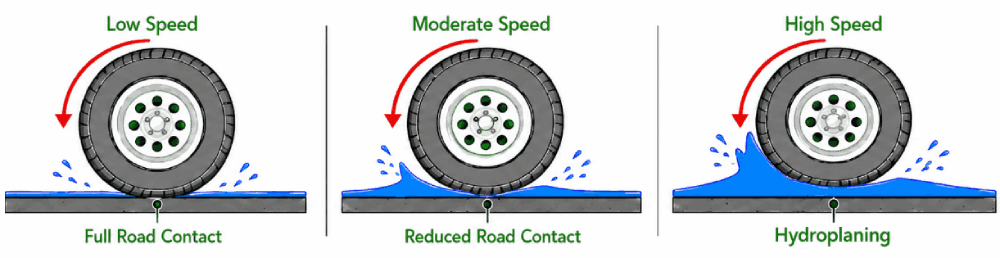
Hydroplaning happens when a tire rides on top of water instead of gripping the pavement.
- Low Speed: At low speed, the tire tread usually has enough time to push water away. The rubber stays connected to the road, so the driver keeps control.
- Moderate Speed: As speed increases, the tire has less time to move water out of the contact patch. Water starts building under the tire, creating a water-filled layer between the rubber and the pavement. The tire is still rolling, but it is no longer gripping the road the same way.
- High Speed: At higher speed, the water cushion can become thick enough to lift the tire completely off the pavement. When that happens, the vehicle may feel like it is floating or sliding. Steering, braking, and acceleration can respond poorly or not respond as expected, which can cause an uncontrollable situation.
How to Avoid Hydroplaning
The best way to avoid hydroplaning is to keep the tire connected to the pavement. That means reducing speed, avoiding standing water, and making sure your tires can move water away fast enough.
Keep Your Tires in Good Condition
Worn tires cannot move water away as well as tires with deeper tread. Low tire pressure can also reduce stability and make wet-road handling worse. Check tire pressure regularly and replace tires before they become unsafe for rainy driving.
Tires are engineered with specific features to manage wet roads:
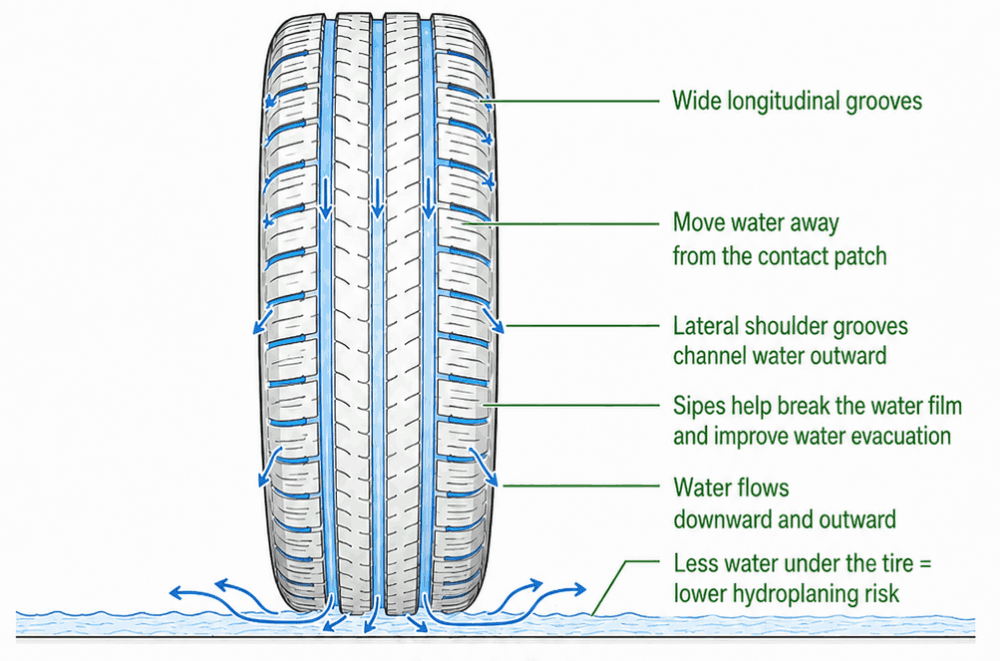
- Wide longitudinal grooves: Move water away from the contact patch.
- Lateral shoulder grooves: Channel water outward.
- Sipes: Tiny slits that help break the water film and improve water evacuation.
When these features work together, water flows downward and outward, resulting in less water under the tire and a lower hydroplaning risk.
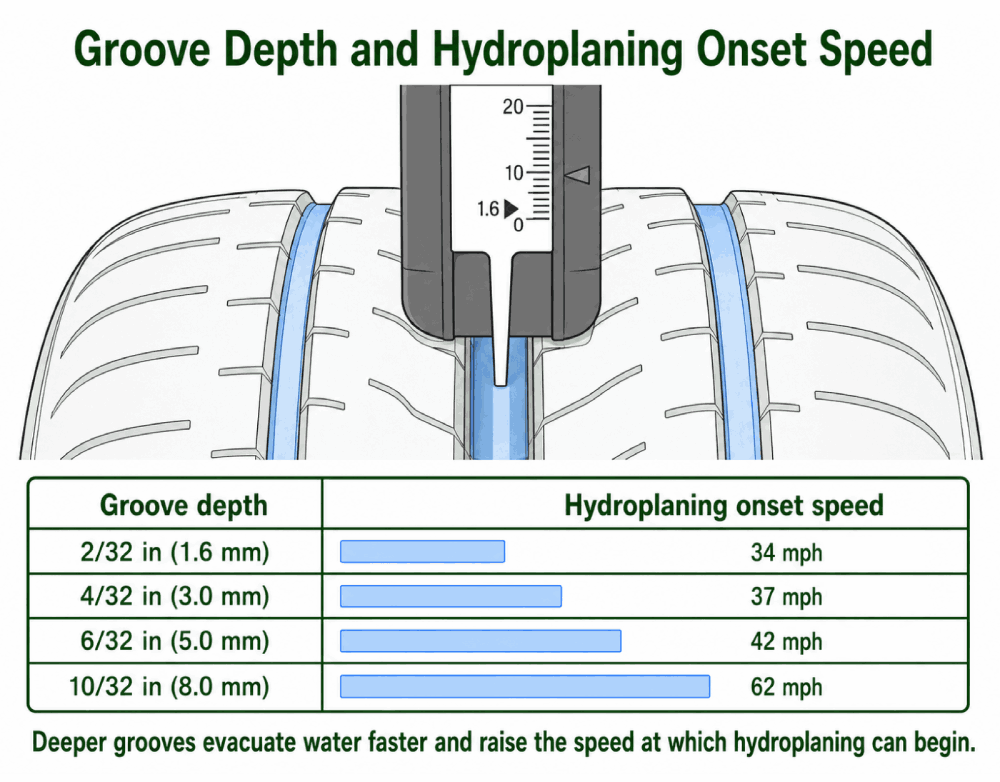
Groove Depth and Hydroplaning Onset Speed
Check your tire wear periodically. Most states legally require a minimum tread depth of 1.6 mm. However, if your tread depth is below 3 mm ahead of the wet season, replacing your tires is strongly advised, regardless of your driving confidence.
As tread depth decreases, the speed at which you can begin hydroplaning drops drastically:
Investing in timely tire maintenance or routine pressure checks is far less expensive than paying a collision deductible or facing years of high-risk insurance surcharges after a preventable accident.
On-the-Road Safety Tactics
Adjusting your behavior behind the wheel is the fastest way to minimize your risk when a storm hits.
- Slow Down Before You Reach Standing Water: Do not wait until the vehicle starts sliding. Slow down before you reach puddles, shiny road patches, or areas where water is collecting near the curb or lane edges. At lower speed, the tire has more time to push water away and maintain contact with the road.
- Turn Off Cruise Control: Cruise control can be risky on wet roads because it tries to maintain speed when your tires may need less speed to keep traction. Keep manual control of your acceleration so you can slow down immediately when road conditions change.
- Avoid the Outer Lanes During Heavy Rain: Water often collects near the right edge of the road, in low spots, and near clogged drains. If the lane is covered with standing water, move away from it when safe. Never drive through deep water if you cannot judge the depth.
- Drive in the Tracks of the Vehicle Ahead: When safe, follow the tire tracks left by the vehicle in front of you. Those tracks often have slightly less water because the first vehicle has already pushed some water aside. Still, keep a safe following distance and do not tailgate just to stay in the tracks.
- Avoid Sudden Braking or Sharp Steering: Hard braking and quick steering can make traction loss worse. In rain, every movement should be smoother than normal. Brake earlier, turn more gradually, and accelerate slowly.
- Keep Both Hands on the Wheel: Rain can hide uneven pavement, potholes, and deeper water pockets. Keep a steady grip on the wheel so you can react smoothly if the vehicle starts to pull, drift, or lose traction. Avoid one-handed driving in heavy rain.
What to Do If an Accident or Slide Happens
Even with careful preparation, emergencies can happen. Knowing exactly how to react can keep a minor slip from turning into a major legal and financial issue.
If You Start Hydroplaning
If the vehicle starts hydroplaning, do not panic and do not slam on the brakes. Ease off the gas, keep the steering wheel steady, and let the tires slow down naturally until they regain contact with the road. If you need to steer, make small, gentle corrections. Once the tires grip again, continue at a lower speed.
If an Accident Occurs
If you are involved in a wet-weather collision, stay calm and take these immediate steps to protect yourself and your insurance claims process:
- Move to safety: If possible, pull your vehicle out of active traffic to a safe location on the shoulder to avoid secondary pile-ups, which are highly common in low-visibility rainstorms.
- Document the environment: Take clear photos and videos of the vehicle damage, the position of the cars, and the active road conditions (such as standing water, heavy downpours, or blocked drains).
- Stick to the facts: Exchange information with the other driver, but do not debate or admit fault at the scene. Let the official police report and your insurance provider handle the determination of fault based on the physical evidence.
- Report the incident immediately: Contact your insurance company right away to start the claims process. Prompt reporting ensures the details are fresh and helps get your vehicle repaired and back on the road quickly.
We believe that past mistakes or a high-risk status shouldn’t keep you from getting affordable, reliable coverage. We specialize in providing low down payments and highly flexible payment plans tailored specifically for drivers working to maintain or rebuild a clean driving record.
While practicing safe wet-weather driving is your best defense against high insurance costs, having the right team in your corner makes all the difference when unexpected situations happen. Get a quick online quote with GoAuto Insurance today and see how easy it is to stay fully covered for less.