
1. Introduction
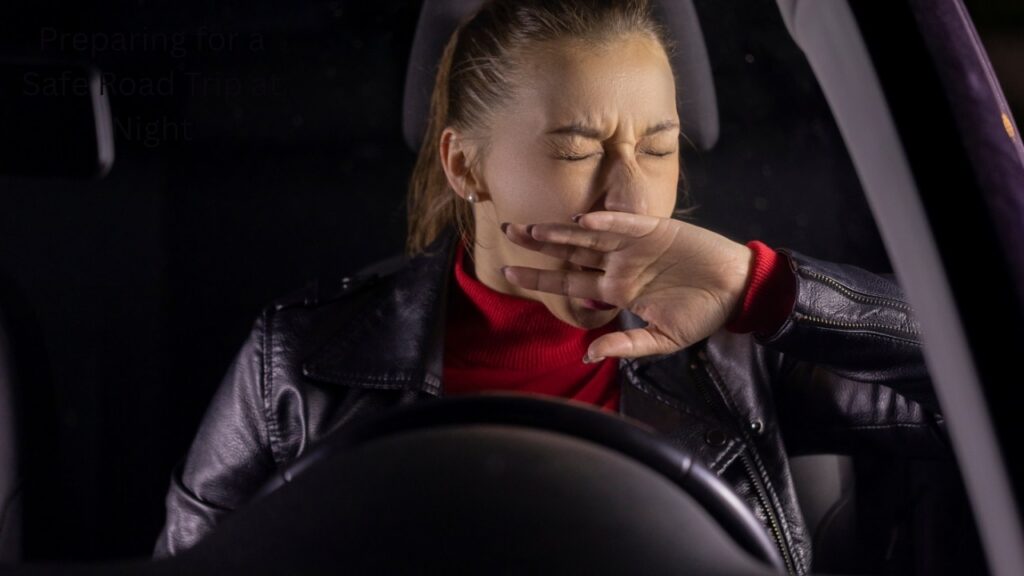
Road trips are the ultimate adventure, offering the chance to explore new horizons and create unforgettable memories. Longer journeys often come with the need for driving at night. But as the sun sets, challenges on the road may arise. Whether it’s battling fatigue, trouble seeing properly or maintaining awareness of other drivers on the road around you, extra precautions must be taken.
2. Why Night Driving Requires Extra Planning
Driving at night is not only a visibility issue. The risk changes based on the hour, the day of the week, the driver’s sleep level, and the behavior of other drivers on the road.
A road at 7 p.m. may feel more dangerous because it is busy, but a road at 2 a.m. can be more dangerous per driver on the road. Fewer cars may be out, but fatigue, alcohol risk, lower visibility, and slower reaction time can all overlap. NHTSA’s 2023 crash data shows that 56% of fatal crashes from midnight to 2:59 a.m. involved alcohol-impaired driving, which helps explain why the overnight window deserves special attention.
3. Dissecting the Data: When Night Driving Becomes Most Dangerous
3.1 Risk by Hour of Night
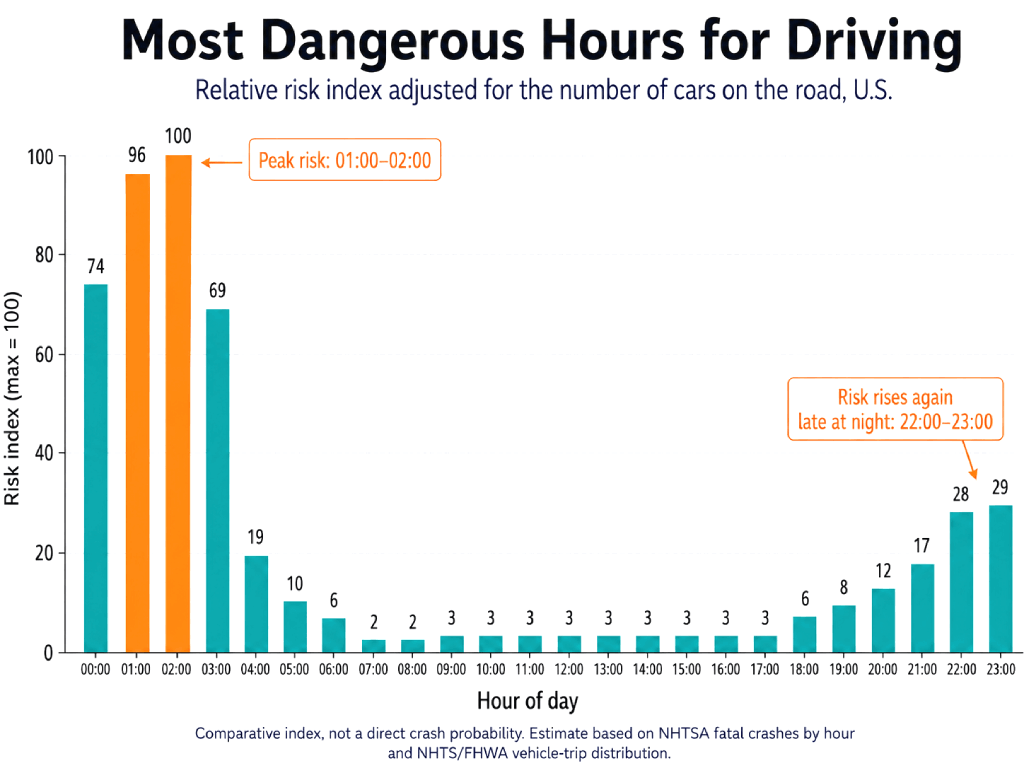
The most dangerous hours for driving are not always the busiest hours. If we only count total crashes, evening rush hour can look like the worst time because more cars are on the road. This graphic uses a relative risk index that adjusts danger against typical travel volume, so it better shows when each driver faces higher risk.
The clearest spike appears between 1 a.m. and 3 a.m., with the highest point around 2 a.m. This is when fatigue, darkness, alcohol exposure, and slower reaction time can combine. The late evening also shows a risk jump double around 10 p.m. to 11 p.m., when visibility is already reduced and fatigue may be building.
The 2022 National Household Travel Survey explains why this adjustment matters. Travel volume changes heavily by time of day, with most trips happening during daytime and peak travel periods, not deep overnight hours.
3.2 Risk by Day of the Week
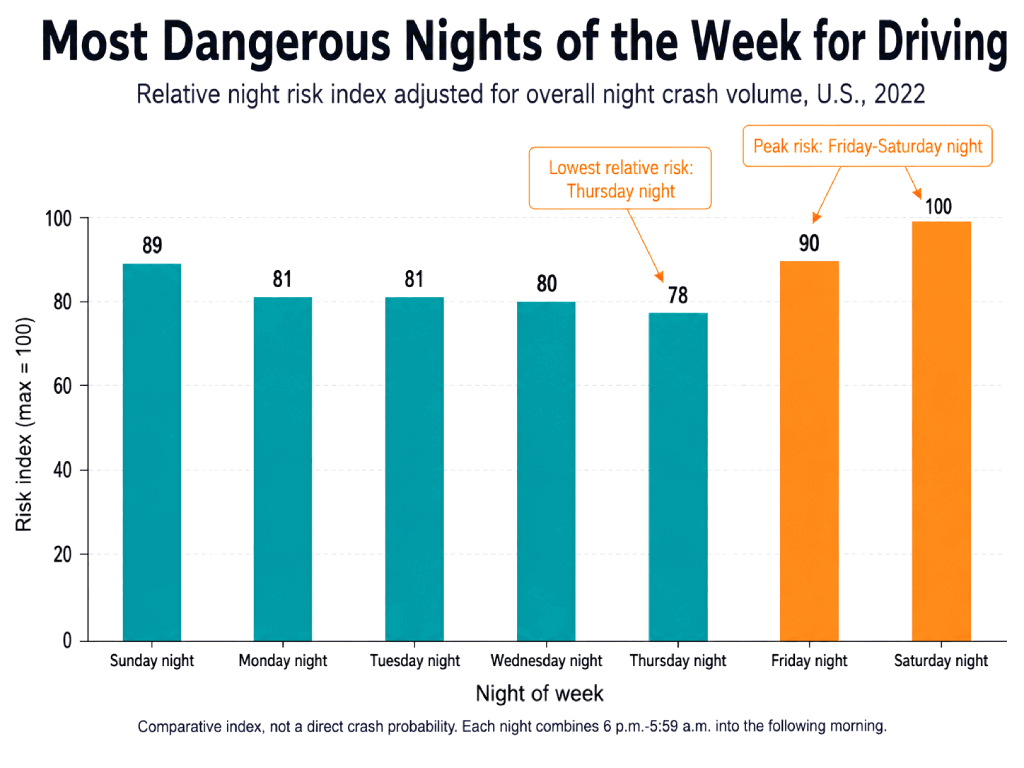
This graphic compares night-driving risk by day of week. Each “night” combines the evening and overnight window from 6 p.m. to 5:59 a.m. the next morning. For example, Friday night includes Friday evening, late Friday night, and early Saturday morning.
The highest-risk nights are Friday night and Saturday night, with Saturday night ranking highest in this index. This pattern is not only about darkness. Weekend nights often include more social driving, more late-night trips, more tired drivers, and higher alcohol exposure.
4. Tips For Safe Night Driving
4.1 Avoid Driving Alone During Night
Driving with an alert passenger is usually safer than driving alone at night. A passenger can act as a second pair of eyes, watch for lane drifting, missed signs, heavy eyelids, or sudden silence, and remind the driver to stop before fatigue becomes dangerous. AAA Foundation for Traffic Safety recommends traveling with an alert passenger and taking turns driving because shared driving can help the driver stay awake and alert.
A passenger can also help keep the driver engaged through normal conversation. Research on sleep-restricted driving found that passenger conversation was studied as a countermeasure during sleepy driving, while another review lists talking to passengers as one behavioral method used to reduce drowsiness behind the wheel.
4.2 Stay Alert and Drive Defensively
Defensive driving matters every time you get behind the wheel, but it matters even more at night. You may not see road hazards as early as you would during the day. This includes pedestrians, cyclists, animals, debris, stopped vehicles, poor weather, and drivers who are tired or impaired.
Reduce your speed
Slower driving gives you more time to react if something unexpected happens. Keep at least three seconds between your vehicle and the car ahead. In rain, fog, or poor visibility, increase that distance.
These driving at night tips are simple, but they matter because reaction time and visibility are both limited after dark.
4.3 High Beams
High beams can help when you are driving on a dark, open road with no nearby traffic. They let you see farther ahead and can help you spot wildlife, stalled vehicles, road debris, or sharp curves sooner.
Do not leave high beams on when approaching another vehicle or following another driver. Bright lights can temporarily blind other drivers and make the road more dangerous for everyone.
If another driver is using high beams, do not stare directly into the headlights. Look slightly down and toward the right edge line of your lane until the vehicle passes. This helps you stay in your lane without being temporarily blinded by glare.
4.4 Dim Your Dashboard and Reduce Interior Light
Bright light inside the car can make it harder for your eyes to adjust to the dark road outside. Dim your dashboard, turn off dome lights, and keep phone screens as low as safely possible.
The darker the cabin is, the easier it is to see lane lines, traffic lights, road signs, pedestrians, and oncoming vehicles. Your gauges should still be readable, but the inside of the car should not compete with your view of the road.
This is one of the most overlooked tips, especially for long road trips where phones, navigation screens, and dashboard lights stay on for hours.
4.5 Have a Clear View Before You Leave
Clean glass matters more at night because dirt, streaks, and smudges can scatter light from headlights and streetlights. Before leaving, clean the windshield inside and outside, wipe the mirrors, and make sure your headlights are clear.
Your headlights act like your eyes in the dark. If they are dirty or cloudy, your visibility drops. If the windshield is smeared, glare becomes worse. Stop at a gas station or car wash before the road trip and touch up the glass along the way when needed.
4.6 Anti-Glare Glasses
Some drivers use anti-glare night driving glasses to reduce harsh reflections from headlights, wet pavement, and streetlights. They may help some people feel more comfortable, but they should not be treated as a fix for poor vision, dirty glass, or unsafe driving.
If glasses make the road look darker or reduce detail, do not use them. Safe night driving depends on seeing lane markings, signs, pedestrians, and other vehicles clearly.
4.7 Grab a Coffee
Caffeine can give you a quick boost when your focus starts slipping. About 75–100 mg of caffeine (one small cup of coffee) can improve alertness within 15–30 minutes, according to research from the National Sleep Foundation.
It helps sharpen reaction time and reduce that heavy, sluggish feeling. Just keep in mind, the effect usually lasts around 2–3 hours, so it’s a short-term boost, not a fix for real fatigue.
4.8 Feeling Drowsy? Take a Short Nap
If your eyes feel heavy or your focus drifts, it’s better to stop and rest. A short 20–26 minute nap can significantly improve alertness. Research from NASA found naps can boost performance by 34% and alertness by over 50%.
In real driving terms, that can translate to 2–3 hours of better concentration after you wake up. Many drivers even combine this with coffee, nap first, then continue once both rest and caffeine kick in.
5. Final Safety Reminder
A safe night road trip starts before the car moves. Plan your route, know where you can stop, and avoid the highest-risk hours when possible.
The most important night driving tips and tricks are not complicated: rest first, slow down, reduce glare, keep the windshield clean, dim the cabin lights, and stop when drowsiness starts. These tips for night driving can help reduce risk, but they do not remove the danger completely.
If your trip falls on a Friday or Saturday night, or if it pushes into the 1 a.m. to 3 a.m. window, treat that part of the drive with extra caution. A short delay is better than taking a risk when your alertness is already dropping.
6. Be Protected Before Your Next Night Drive
Even careful drivers can run into problems on a night road trip, from poor visibility and tired drivers to unexpected accidents far from home.
GoAuto Insurance helps you stay covered with practical auto insurance options and a claims process built to get you back on the road as quickly as possible. Before your next long drive, make sure your policy is active, your proof of insurance is easy to access, and your coverage fits the way you drive.
Get a quote today and drive with more confidence before your next night trip.
Sources:
National Highway Traffic Safety Administration:
Fatal Crashes and Percent Alcohol-Impaired Driving, by Time of Day and Crash Type, 2023
https://www-fars.nhtsa.dot.gov/crashes/crashesalcohol.aspx
Traffic Safety Facts 2022 A Compilation of Motor Vehicle Traffic Crash Data
https://crashstats.nhtsa.dot.gov/Api/Public/ViewPublication/813656.pdf